Running a small business involves more than selling products or providing services. You also need to understand where your money comes from, how much you spend, and whether your business is making a profit.
Bookkeeping helps you keep track of these important details. However, many small business owners struggle to maintain accurate financial records while managing daily operations.
Missing receipts, unpaid invoices, unexpected expenses, and incorrect financial reports can create serious problems over time.
The good news is that managing your books does not have to be complicated.
Following practical bookkeeping tips for small business owners can help you organize financial information, reduce mistakes, prepare for taxes, and make better business decisions.
In this guide, we will explore essential bookkeeping practices that every small business owner should understand.
What Is Bookkeeping for Small Businesses?
Bookkeeping is the process of recording, organizing, and maintaining a business’s financial transactions.
These transactions include money received from customers, payments made to suppliers, employee wages, operating expenses, and other business activities.
Proper bookkeeping helps business owners understand their financial position and maintain reliable records.
Common bookkeeping activities include:
- Recording daily income and expenses.
- Tracking customer invoices and payments.
- Managing bills and supplier payments.
- Reconciling bank accounts.
- Organizing receipts and financial documents.
- Preparing monthly financial reports.
- Monitoring cash flow.
Unlike accounting, which also involves analyzing financial information and preparing financial statements, bookkeeping focuses mainly on maintaining accurate records.
Both activities are important for running a financially healthy business.
Why Bookkeeping Matters for Small Business Owners
Accurate bookkeeping provides more than organized financial records. It helps business owners make informed decisions and avoid unnecessary financial problems.
Better Financial Control
Keeping your books updated allows you to understand how much money your business earns and spends.
You can identify unnecessary expenses, monitor income, and make informed decisions about future investments.
Easier Tax Preparation
Proper records help you identify potentially deductible business expenses and provide supporting documents when preparing tax returns.
Incomplete records can make tax preparation more difficult and increase the risk of reporting errors.
Improved Cash Flow Management
A profitable business can still experience cash shortages.
Bookkeeping helps you identify upcoming payments, overdue customer invoices, and periods when additional cash may be needed.
Better Business Planning
Accurate financial reports help you understand business performance.
You can compare monthly income, identify spending patterns, and plan for future growth.
15 Essential Bookkeeping Tips for Small Business Owners
The following practices can help you maintain accurate records and build a stronger financial foundation for your business.
1. Separate Business and Personal Finances
One of the most important bookkeeping tips for small business owners is to keep business and personal finances separate.
Using the same bank account for business and personal transactions can make financial tracking confusing.
For example, paying for groceries and business supplies from the same account makes it harder to determine which expenses belong to your business.
To avoid this problem:
- Open a dedicated business bank account.
- Use a separate card for business purchases.
- Pay business expenses directly from your business account.
- Record personal withdrawals correctly.
- Avoid using business funds for unnecessary personal purchases.
Separate financial accounts make bookkeeping easier and help maintain clearer records.
They also make it easier to identify business expenses during tax preparation.
2. Record Every Financial Transaction
Small transactions may seem unimportant, but they can create significant differences in your books when ignored.
Every business transaction should be recorded accurately.
This includes:
- Customer payments.
- Supplier purchases.
- Office supplies.
- Software subscriptions.
- Advertising expenses.
- Employee salaries.
- Bank charges.
- Business travel expenses.
Record the date, amount, description, and appropriate category for each transaction.
For example, a $50 software subscription should be recorded under the correct expense category rather than grouped with unrelated purchases.
Recording transactions regularly helps prevent missing information and reduces the amount of work required at month end.
3. Choose the Right Bookkeeping Software
Modern bookkeeping software can make financial management more manageable.
Instead of relying entirely on spreadsheets or paper records, businesses can use accounting software to organize transactions and generate reports.
Popular options include Xero and QuickBooks Online.
Depending on the selected software and subscription, useful features may include:
- Bank transaction imports.
- Invoice creation and tracking.
- Expense categorization.
- Financial reporting.
- Bank reconciliation.
- Customer and supplier management.
- Integration with other business applications.
The right software depends on your business size, transaction volume, reporting needs, and budget.
For example, a freelance consultant may only need basic expense tracking and invoicing, while an ecommerce business may require inventory and sales platform integrations.
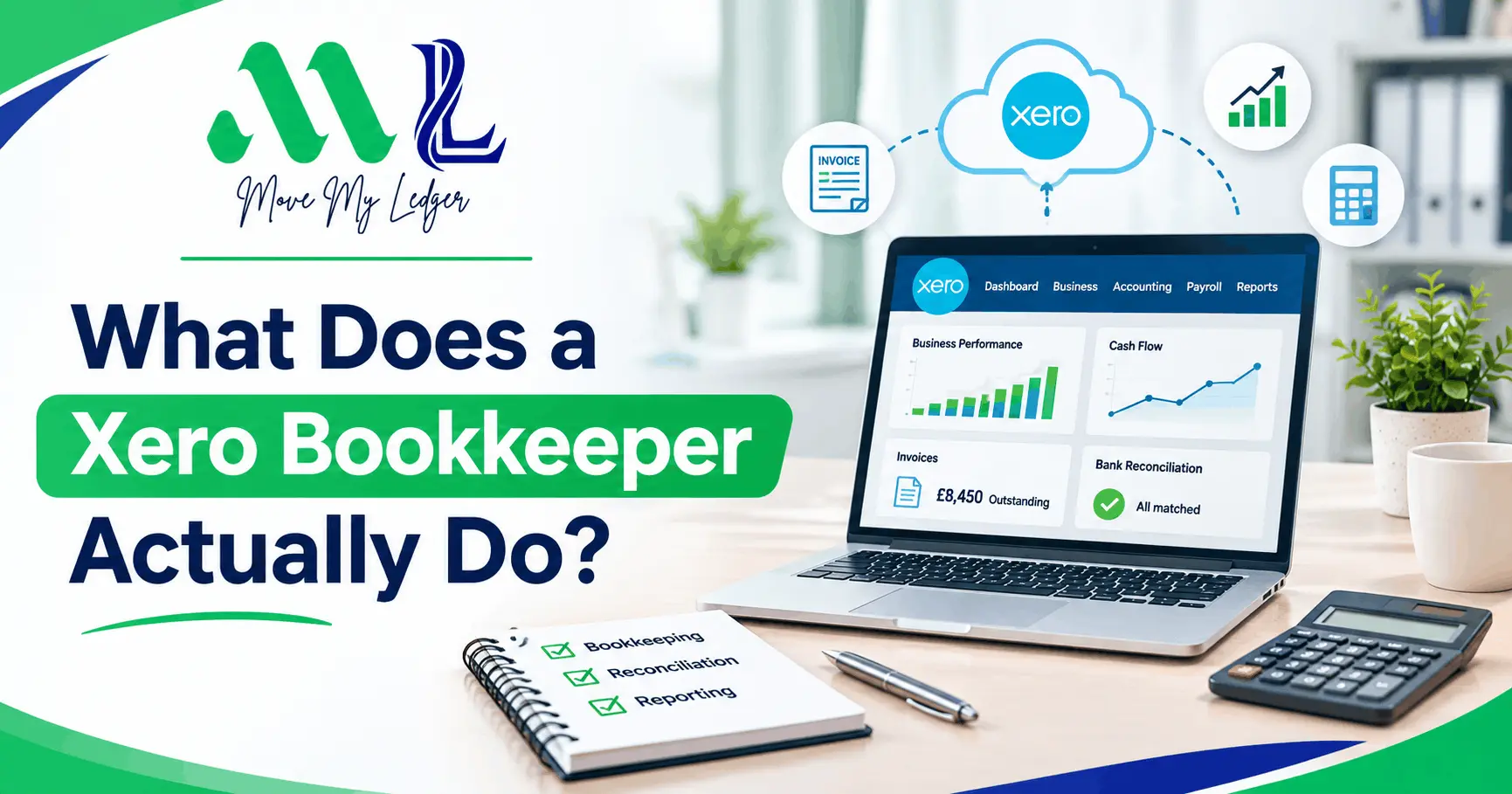
If your business uses Xero, professional Xero Bookkeeping Services can help maintain accurate monthly records, reconcile accounts, and prepare financial reports.
4. Track Business Expenses Carefully
Untracked expenses can affect profitability and create problems during tax preparation.
Business owners should maintain organized records of operating costs.
Common expense categories include:
| Expense Category | Examples |
|---|---|
| Office expenses | Stationery, office supplies |
| Technology | Software subscriptions, hosting |
| Marketing | Online advertisements, promotions |
| Travel | Business transportation, accommodation |
| Professional services | Accounting, bookkeeping, legal services |
| Utilities | Internet, electricity, telephone |
| Payroll | Employee wages and related costs |
Categorizing expenses helps you understand where your money goes.
It also makes it easier to identify costs that may qualify for tax deductions, subject to the applicable tax rules.
Avoid guessing expense categories. When you are unsure, check with your accountant or bookkeeper.
5. Reconcile Bank Accounts Every Month
Bank reconciliation means comparing transactions recorded in your accounting system with your bank statement.
The purpose is to identify missing transactions, duplicates, bank charges, and other differences.
For example, your accounting software may show a bank balance of $8,500 while the bank statement shows $8,300.
The $200 difference could result from an unrecorded payment, an outstanding transaction, or an incorrect entry.
Regular reconciliation helps you:
- Identify errors early.
- Detect missing transactions.
- Reduce duplicate entries.
- Verify account balances.
- Maintain reliable financial information.
Reconcile all relevant business bank accounts, credit cards, and payment accounts.
Businesses with high transaction volumes may benefit from weekly reconciliation instead of waiting until month end.
6. Maintain Organized Receipts and Invoices
Receipts and invoices provide important evidence of business transactions.
Losing these documents can make it difficult to verify expenses or support information reported on tax returns.
Consider creating a digital filing system for your business documents.
Organize files by year, month, and document type.
For example:
2026 > November > Supplier Invoices
Digital records may include scanned receipts, electronic invoices, payment confirmations, and bank statements.
Make sure documents remain readable, secure, and accessible when needed.
The Internal Revenue Service (IRS) recordkeeping guidance explains the importance of maintaining business records and supporting documents for US tax purposes. Internal Revenue Service+1
Businesses in Canada or other countries should follow their local recordkeeping requirements.
7. Monitor Your Cash Flow Regularly
Cash flow refers to the money entering and leaving your business.
Positive cash flow means more cash comes in than goes out during a particular period.
Negative cash flow means your business spends more cash than it receives.
For example, a business may generate $15,000 in sales but receive only $9,000 immediately because some customers have not paid their invoices.
Meanwhile, the business may still need to pay employees, suppliers, and rent.
This can create a cash shortage even when the business reports a profit.
To manage cash flow:
- Review incoming and outgoing payments.
- Track unpaid customer invoices.
- Plan for upcoming bills.
- Monitor recurring expenses.
- Maintain a reasonable cash reserve where possible.
- Prepare short term cash flow forecasts.
Cash flow monitoring helps business owners prepare for financial challenges before they become serious.
8. Create a Monthly Bookkeeping Schedule
Consistency is one of the most effective bookkeeping practices.
Waiting until the end of the financial year to organize records can lead to missing documents and incorrect entries.
Instead, establish a regular bookkeeping routine.
A practical schedule might look like this:
| Frequency | Bookkeeping Tasks |
|---|---|
| Daily | Record income and expenses, save receipts |
| Weekly | Review invoices, bills, and transactions |
| Monthly | Reconcile accounts, review financial reports |
| Quarterly | Review budgets, taxes, and cash flow |
| Annually | Prepare year end records and support tax filing |
You can adjust this schedule depending on your transaction volume.
Even dedicating a short period each week to bookkeeping can help prevent larger problems later.
9. Monitor Accounts Receivable and Payable
Accounts receivable represents money customers owe your business.
Accounts payable represents money your business owes suppliers and other creditors.
Managing both is important for maintaining financial stability.
For accounts receivable:
- Send invoices promptly.
- Clearly state payment terms.
- Monitor overdue invoices.
- Send payment reminders.
- Review outstanding customer balances.
For accounts payable:
- Record supplier invoices accurately.
- Monitor due dates.
- Avoid duplicate payments.
- Check available funds before making payments.
- Review outstanding bills regularly.
For example, if customers owe your business $12,000 while supplier bills totaling $9,000 are due soon, you need to understand when customer payments are expected.
Tracking these balances helps prevent unexpected cash shortages.
10. Review Financial Reports Every Month
Financial reports turn bookkeeping records into useful business information.
Small business owners should review three key reports regularly.
Profit and Loss Statement
A profit and loss statement shows income, expenses, and profit or loss over a specific period.
It helps you understand whether your business is operating profitably.
Balance Sheet
A balance sheet shows what your business owns, what it owes, and the owner’s equity at a particular date.
It provides a snapshot of your business’s financial position.
Cash Flow Statement
A cash flow statement shows cash movements from operating, investing, and financing activities.
It helps explain how cash is generated and used.
Reviewing these reports can highlight rising expenses, declining sales, and changes in financial performance.
More importantly, it helps you make decisions based on accurate information rather than assumptions.
11. Prepare for Taxes Throughout the Year
Tax preparation should not begin only when filing deadlines approach.
Maintaining accurate records throughout the year helps reduce last minute work.
Useful practices include:
- Recording income correctly.
- Keeping supporting receipts.
- Tracking potentially deductible expenses.
- Monitoring relevant sales taxes.
- Maintaining payroll records.
- Reviewing upcoming tax obligations.
- Consulting a qualified tax professional when necessary.
Tax responsibilities vary depending on your country, business structure, and activities.
For example, businesses in the United States may have federal and state tax requirements, while Canadian businesses may need to account for GST/HST and other applicable taxes.
Keeping your bookkeeping updated helps your accountant prepare accurate returns using reliable financial information.
12. Avoid Common Bookkeeping Mistakes
Many bookkeeping problems come from simple mistakes that are repeated over time.
Common examples include:
Mixing personal and business expenses: This makes transaction tracking and reporting more difficult.
Recording transactions twice: Duplicate entries can overstate income or expenses.
Ignoring small expenses: Missing transactions can produce inaccurate financial reports.
Failing to reconcile accounts: Errors may remain undetected for months.
Incorrect transaction categorization: Financial reports may not reflect actual business activities.
Ignoring unpaid invoices: Outstanding customer balances may increase without proper follow up.
Confusing profit with cash: A profitable business can still struggle to pay its bills.
Reviewing your bookkeeping process regularly can help identify these problems before they affect important decisions.
13. Protect and Back Up Financial Data
Your bookkeeping records contain sensitive financial information.
Losing access to this information can disrupt business operations and create problems during tax preparation.
Protect your financial records by:
- Using strong, unique passwords.
- Enabling multifactor authentication.
- Limiting access to authorized people.
- Keeping software updated.
- Maintaining secure backups or exports.
- Reviewing account permissions periodically.
Cloud accounting software may provide built in security and recovery features, but you should still understand the provider’s backup and data retention policies.
A secure bookkeeping system protects important business information and supports continuity when technical problems occur.
14. Set a Budget and Compare Actual Expenses
A budget helps you plan how much your business expects to earn and spend.
Bookkeeping records allow you to compare these expectations with actual results.
For example, suppose your monthly marketing budget is $1,000.
At the end of the month, your records show that you spent $1,350.
This difference tells you that marketing spending exceeded your original budget by $350.
You can then investigate whether the additional spending generated enough value.
Reviewing budgets helps you:
- Control unnecessary spending.
- Set realistic financial goals.
- Identify changes in operating costs.
- Plan future purchases.
- Allocate money more effectively.
A budget becomes much more useful when it is supported by accurate, regularly updated financial records.
15. Consider Hiring a Professional Bookkeeper
As your business grows, bookkeeping can become more demanding.
More customers, suppliers, employees, and payment methods usually mean more transactions to manage.
Handling everything yourself may become difficult, especially when you also need to focus on sales, customer service, and business operations.
A professional bookkeeper can help with:
- Recording and categorizing transactions.
- Reconciling bank and credit card accounts.
- Managing invoices and bills.
- Reviewing bookkeeping errors.
- Preparing monthly financial reports.
- Organizing records for your accountant.
- Maintaining accurate financial information.
Professional support can be particularly valuable when your records are behind, your business is growing quickly, or you use several financial systems.
Businesses using QuickBooks Online can explore QuickBooks Bookkeeping Services from Move My Ledger for ongoing transaction management, reconciliations, and monthly reporting.
How to Build an Effective Small Business Bookkeeping System
Following individual bookkeeping tips is helpful, but creating a consistent system produces better long term results.
Here is a straightforward approach.
Step 1: Select Your Accounting Method
Businesses generally use either cash basis or accrual basis accounting.
Under cash basis accounting, income and expenses are generally recognized when payments are received or made.
Under accrual accounting, income and expenses are generally recognized when earned or incurred, even when payment happens later.
The appropriate method depends on your business circumstances and applicable accounting and tax rules.
Step 2: Organize Your Financial Accounts
Create appropriate categories for income, expenses, assets, liabilities, and equity.
This structure is commonly called a chart of accounts.
A well organized chart of accounts helps produce meaningful financial reports.
Step 3: Establish Recording Procedures
Decide how sales, purchases, refunds, bank transfers, and other transactions should be recorded.
Use consistent categories and maintain supporting documents.
Step 4: Set Review Deadlines
Schedule regular reviews for bank reconciliation, unpaid invoices, supplier balances, and financial reports.
Assign responsibility for completing each task.
Step 5: Review and Improve Your System
Your bookkeeping needs may change as your business expands.
Review your software, reporting requirements, and bookkeeping procedures periodically to make sure they continue to support your business.
How Technology Can Improve Small Business Bookkeeping
Technology has changed how small businesses manage their financial records.
Cloud accounting software allows authorized users to access accounting information from different locations and connect financial information with other business tools.
Depending on the software, businesses may be able to automate repetitive activities such as bank transaction imports, recurring invoices, and payment reminders.
This can reduce manual data entry and help maintain more current records.
However, automation does not eliminate the need for human review.
Imported transactions may still require correct categorization. Bank feeds can contain duplicate entries, and automated rules may occasionally assign incorrect accounts.
Business owners should review their records regularly, even when using automated bookkeeping tools.
When Should a Small Business Upgrade Its Bookkeeping Process?
A bookkeeping system that works for a new business may no longer be suitable as transaction volumes increase.
Some signs that your bookkeeping process needs improvement include:
- Financial reports are frequently delayed.
- Bank balances do not match accounting records.
- Customer invoices remain unpaid without follow up.
- Transactions are recorded several months late.
- Expense categories are inconsistent.
- Your business uses several disconnected spreadsheets.
- You cannot easily determine monthly profitability.
- Preparing information for your accountant takes too much time.
These problems may indicate that your business needs better accounting software, improved procedures, or professional bookkeeping support.
Addressing them early can prevent additional errors and reduce the amount of corrective work required later.
Benefits of Maintaining Accurate Bookkeeping Records
Applying effective bookkeeping tips for small business owners can provide several long term benefits.
Greater financial visibility: You can understand business performance using updated financial information.
Better expense control: Accurate records make unnecessary or increasing costs easier to identify.
Improved decision making: Reliable reports support decisions about pricing, hiring, purchases, and expansion.
More organized tax preparation: Proper financial records make it easier to prepare information for your accountant or tax professional.
Stronger cash flow planning: Tracking expected payments helps you prepare for future financial commitments.
More time for business operations: A consistent bookkeeping process can reduce the time spent searching for documents and correcting mistakes.
Maintaining good records does not guarantee business success, but it provides the information needed to manage financial responsibilities more effectively.
Final Thoughts
Bookkeeping is an essential part of running a successful small business.
Accurate records help you understand financial performance, manage expenses, monitor cash flow, and prepare for tax obligations.
The most useful bookkeeping tips for small business owners are often the simplest: separate business and personal finances, record transactions regularly, reconcile accounts, organize receipts, and review financial reports.
Choosing appropriate accounting software and creating a consistent bookkeeping schedule can make these tasks easier to manage.
As your business grows, professional bookkeeping support can also help maintain reliable financial information.
The key is consistency. Keeping your books updated throughout the year is far more effective than trying to correct months of missing information at the last minute.
Get Professional Bookkeeping Support from Move My Ledger
Accurate bookkeeping gives your business a clearer picture of its financial health.
At Move My Ledger, we help small businesses across the USA and Canada maintain organized financial records through professional Xero and QuickBooks bookkeeping services.
Our experienced team can assist with monthly bookkeeping, bank reconciliations, expense tracking, invoice management, and financial reporting.
Whether you need help bringing your records up to date or managing ongoing bookkeeping, we can review your requirements and recommend a suitable service.
Ready to take better control of your business finances?
Contact Move My Ledger to request a bookkeeping quote and find out how our bookkeeping specialists can support your business.